

What Is Soft 17 in Blackjack: Full Guide for Australian Players
What is soft 17 in blackjack? This is a hand in any blackjack game totalling 17 where an ace can be counted as 11, providing flexibility and a unique set of strategy decisions for both players and the dealer. The soft 17 rule shapes the house edge, influences dealer behaviour, and has a direct impact on your chances during casino gambling, whether you prefer Australian online casinos or classic table games on land. Understanding the differences between soft and hard hands, and the effect of dealer rules, is essential for everyone looking to master the basic blackjack strategy and win more in both single deck blackjack games and multi-deck shoe play.
What Is Soft 17 in Blackjack?
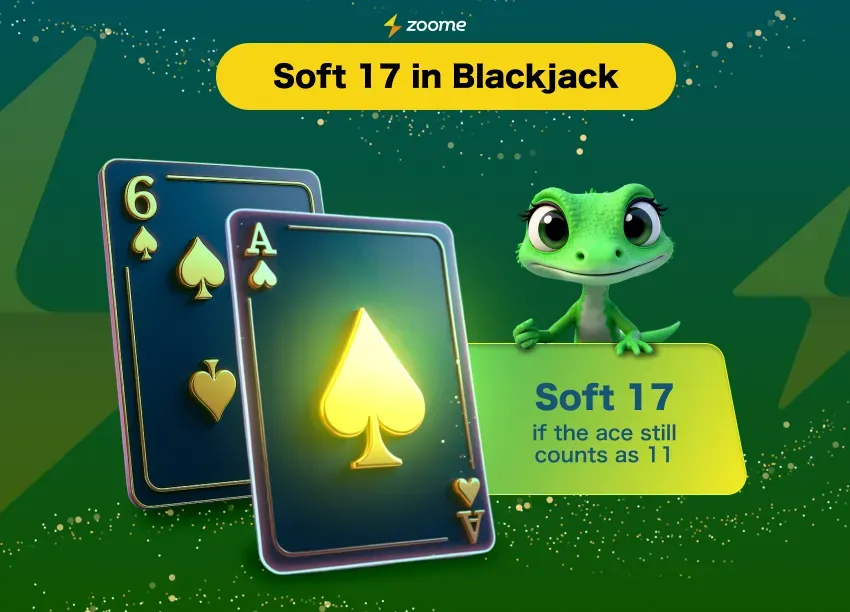
A soft 17 means any blackjack hand where the total is 17 and an ace is counted as 11. The most common example is ace-6, but you might also have ace-3-3, ace-4-2, or ace-2-2-2—all these hands are considered soft 17 if the ace still counts as 11. The ace gives you flexibility: if you hit and would go over 21, the ace simply switches from 11 to 1, so you can't bust on the next card.
Soft 17 is special because it’s not a “fixed” hand. Unlike hard 17, which is static and potentially dangerous to hit, you have options to improve your blackjack hand with less risk.
Understanding Soft Hands and Basic Blackjack Strategy
A soft hand in blackjack refers to any hand that includes an ace counted as 11, not 1. This makes all soft hands (including soft 17) fundamentally safer—by taking another card, you can improve without fear of immediate bust. For instance, soft 17 (Ace-6) gives you two options: stay at 17, or hit for a potential stronger hand, letting the ace drop to a 1 if needed.
Soft seventeen is the most important “soft” hand because the decision to hit or stand (for both dealer and player) has a significant effect on basic strategy, expected value, and the house edge. If you want to test other games with similar strategy - you can visit our section of online baccarat Australia.
Examples of Hits Soft 17 Hands and Their Totals
Soft hands, especially soft 17, let both advanced players and cautious newcomers deploy more nuanced blackjack strategy.
|
Hand Example |
Count as |
Soft/Hard |
Safety if Hit? |
|
Ace-6 |
17 |
Soft |
Cannot bust |
|
Ace-3-3 |
17 |
Soft |
Cannot bust |
|
Ace-5-2 |
18 |
Soft |
Cannot bust |
|
Ace-10-6 |
17 |
Hard |
Can bust |
|
9-8 |
17 |
Hard |
Can bust |
The Difference Between Hard 17 and Soft 17
What is a hard 17 in blackjack? Hard 17 means you’ve got 17 with no ace counted as 11—like 10-7, 9-8, or Ace-6-10 (here, the ace must count as 1). If you hit a hard 17 and draw anything above 4, you bust. What is a soft 17 in blackjack? Ace-6, Ace-3-3, or other combinations with an ace as 11—these hands give you that one extra chance for improvement.
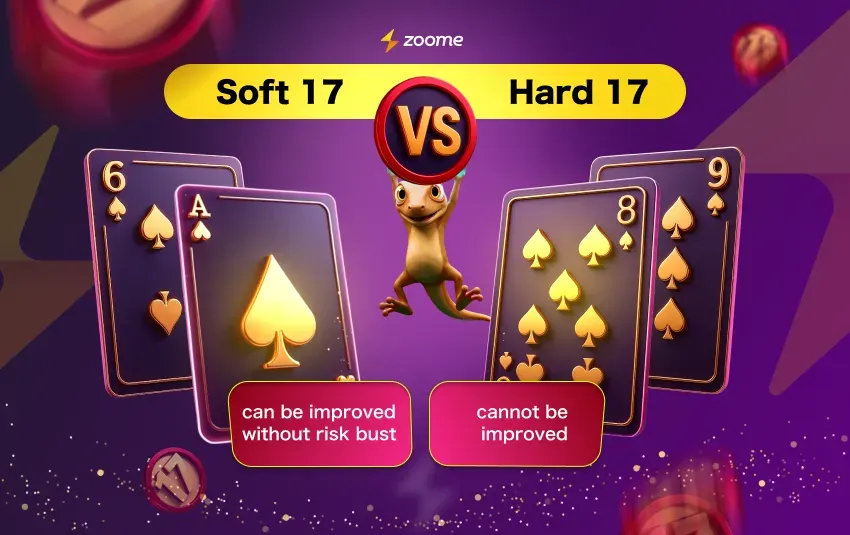
While most blackjack players stand quickly on hard 17, with soft 17 you gain “insurance”: you cannot bust by drawing one more card. Gamblers with a strong hand (like 20 or 21) never want to risk it, but soft 17 isn’t strong—just flexible. However, even though hitting on a soft 17 is generally safer, there is still a chance you could end up with a worse hand if the next card lowers your total.
Visual Summary: Soft 17 vs Hard 17 Actions
In some situations, players may choose to stand pat on hard 17, but standing pat is not recommended for soft 17.
|
Hand |
Standard Play |
Risk if Hit |
|
Soft 17 |
Hit/Double |
None (can’t bust) |
|
Hard 17 |
Stand |
Bust (if over 21) |
This difference shapes the entire approach to basic blackjack strategy at any table.
Why Soft 17 Matters in the Game
Soft 17 is a strategic pivot point in all blackjack games, affecting both the dealer's hand and the player's moves. The way casinos handle soft 17—whether via the "dealer hits soft 17" or "dealer stands on soft 17" rule—alters the casino’s edge and your long-term odds.
In most casinos, blackjack dealer rules soft 17 are displayed visibly; table minimums and payoff charts may also reference the rule. If the dealer must hit soft 17 (sometimes shown as “Dealer must hit S17” or “H17”), it improves the casino’s edge and makes even the best blackjack strategy less effective for the player. If the dealer stands on soft 17, that gives players slightly better odds.
Knowing the exact soft 17 rule at any blackjack table is crucial for long-term success.
What Does “Dealer Rules on Hits Soft 17” Mean?
When you see “dealer hits soft 17” at a blackjack table, it means the dealer must always take another card with any soft 17, like ace-6 or ace-3-3-10—this requires the dealer to draw an additional card. This is one of the most important blackjack rules, and its impact stretches over every hand and every bet you make. Why does it matter? A dealer forced to hit soft 17 is likelier to improve to 18, 19, or even make 21, but also slightly raises their risk of busting. This gives the dealer a better chance of reaching a stronger hand.
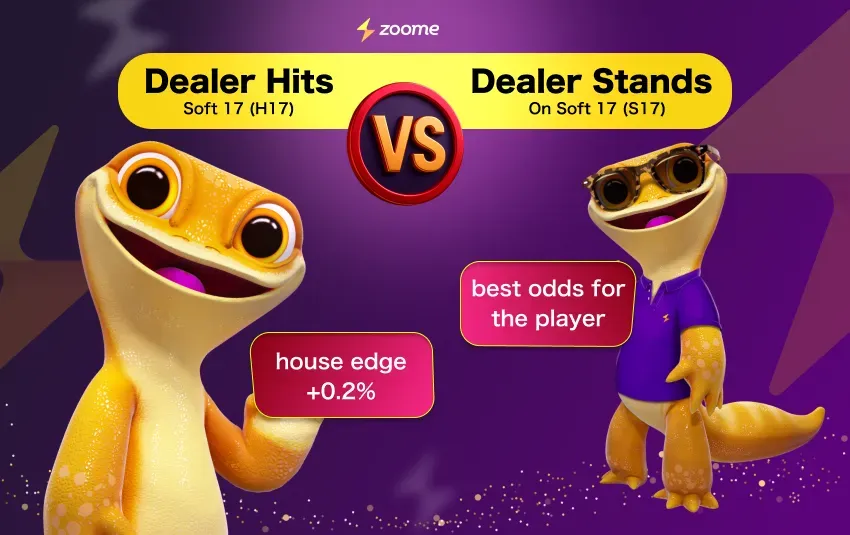
Statistically, with the hits soft 17 rule, the house edge increases by roughly 0.2%. Over a hundred hours or thousands of bets, that’s a major difference for any player’s expected value.
What Does “Dealer Stands on Soft 17” Mean?
If the table says "dealer stands on soft 17," the dealer will not draw with ace-6 or similar combinations—they stop, regardless of your hand or any previous bet. Dealer must stand on soft 17 meaning is clear: the casino's edge diminishes, giving more power to solid blackjack strategy for the player.
When the dealer stands, you’re more likely to see weaker dealer outcomes and more frequent dealer busts. This is one key element of why single deck blackjack games, double deck, or even advanced multi-deck games can offer better long-term value depending on which version of the rule is enforced. Always go for "dealer stands" games when you can, as these boost your odds.
How Soft 17 Affects Blackjack Strategy
The soft 17 rule has a direct impact on how every blackjack hand is played—especially at Australia online casino games where H17 and S17 tables both exist. When playing blackjack, it’s crucial to understand which rule is in effect, as it can significantly influence your strategy and the house edge.
Basic strategy charts will differ depending on the rule for the table, but generally, you should:
- Always hit soft 17 against any dealer upcard unless doubling is allowed.
- Double down on soft 17 when the dealer shows a 3, 4, 5, or 6, as these weak upcards make the double the best play when permitted.
- Never stand on soft 17, regardless of gut feeling. Stick to the chart, not emotion.
Example:
- At Zoome’s VIP Blackjack, if the table uses H17, be aggressive with soft hands; in S17 games, you can play slightly more conservatively.
Player Strategy Against a Dealer Soft 17
When facing a dealer that hits soft 17, you need to up your game. The strategy becomes more aggressive for players holding their own soft 17, or even soft 18, especially if the dealer is showing a low upcard. If you have soft 17, always hit—basic strategy demands it.
If double is allowed and the dealer’s upcard is between 3 and 6, double down. This is especially true in single or double deck games but also applies in multi-deck shoe games. In fact, single deck games where the dealer stands on soft 17 offer the best odds for the player. If the dealer shows a 7 or higher, hit for a better hand. If the dealer stands on soft 17, some hands that would be hits with H17 rules can now stand.
Step-by-Step: How to Play Soft 17 as the Player
- Assess the dealer’s upcard before acting.
- Double down on your soft 17 when dealer shows weaker cards (3–6), if allowed.
- Hit on all other upcards, especially dealer 2 and 7–ace.
- If you draw and reach soft 18 or higher, shift to the normal basic strategy for those totals.
- Only stand if your hand improves to hard 18+ after hitting.
The flexibility of soft 17 gives skilled blackjack players at online poker real money Australia or live tables meaningful extra edge versus the house, as it’s a chance to attack when the odds shift.
House Edge When Dealer Hits vs. Stands on Soft 17
The soft 17 rule is one of the biggest contributors to the house edge in blackjack. Though a 0.2% increase may feel small, over thousands of hands it adds up—especially for experienced blackjack players grinding for maximum value.
When late surrender is available alongside favorable soft 17 rules, it can further reduce the house edge and provide players with more optimal strategies to minimize losses.
House Edge Impact by Rule
Choosing S17 tables where possible is key for advanced blackjack players and anyone looking to play the best odds.
|
Rule Variation |
House Edge Impact |
Player Strategy Difference |
|
Dealer hits soft 17 (H17) |
Higher (+0.2%) |
Hit/Double more often |
|
Dealer stands on soft 17 |
Lower |
Aggressive strategies less often |
|
Blackjack pays 3:2 + S17 |
Best scenario |
Lower casino’s edge |
|
H17 + 6:5 payout |
Worst scenario |
House edge can top 2% |
Soft 17 Rule Variations by Casino or Game Type
Rule variations are common, especially online and in different casino regions. Here’s what you’ll see most often:
- Single deck blackjack / double deck games often use dealer stands on soft 17 for better odds and more classic play.
- Multi-deck shoe games frequently use H17, raising the house edge to protect casino profits.
- Australian online live casino rooms, like Zoome, post the soft 17 rule at every blackjack table so players are never caught out.
Reading the table before you bet is crucial; casino games with S17 + 3:2 payouts usually deliver the best long-term results.
Should You Hit or Stand on Soft 17 as a Player?
Basic strategy says always hit or double down on soft 17. Standing puts you in a bad spot, with weak win odds against most dealer hands—especially if the dealer’s upcard is 7 or higher.
- Double Down: Soft 17 vs. dealer 3–6 (if allowed by blackjack rules).
- Hit: Against all other dealer's upcards.
- Never Stand: Hard 17 only; soft 17s always have a better move.
Players sticking with this fundamental approach will see long-term benefits in RTP and win rate. Print a basic strategy chart specific to H17 or S17 for any table you play.
Comparison Table: Player and Dealer Actions on Soft 17
|
Rule |
Dealer Soft 17 |
Player Soft 17 (Best Play) |
House Edge (%) |
|
Hits Soft 17 |
Must hit |
Hit/Double (never stand) |
0.7–1.0 |
|
Stands Soft 17 |
Must stand |
Hit/Double (never stand) |
0.5–0.8 |
|
3:2 With S17 |
Stands |
Hit/Double (never stand) |
0.3–0.6 |
|
6:5 With H17 |
Hits |
Hit/Double (never stand) |
1.5+ |
This summary is also useful for adapting your play when you move to real online pokies or roulette casino game for a change of pace.
Soft 17 Rule, Table Selection, and Zoome Bonus Value
At Zoome Casino, you’ll find every blackjack table (from VIP Blackjack to Multihand Pro) lists its soft 17 rule right on the felt. Advanced players seeking the lowest house edge (and best RTP) always look for the S17 rule, often in classic or single deck blackjack games. When you claim a Zoome casino bonus, put it to work on these tables for more play and real long-term value—sometimes tipping the odds in your favour for an entire session.
Advanced Players, Card Counting, and Soft 17
For advanced players, the soft 17 rule isn’t just about whether to hit or stand—it guides seat selection, bet size adjustments, and even card counting decision-making. In games with a dealer that hits soft 17, the difference in edge means counters may need bigger bankrolls or switch strategy altogether. Some prefer online keno real money Australia or progressive jackpot slots online for variance, but blackjack remains the classic test of skill.
Always use the right strategy charts and watch rule variations, as small shifts in percentages have big effects in the long run.
Soft 17 in Blackjack: Common Myths and Misconceptions
Many players mistakenly believe soft 17 is a "strong hand" or that it requires a defensive stand. In reality, soft 17 is only valuable for its flexibility—never for the raw total. Standing on soft 17 always gives away the edge to the house, and should only be done by mistake or with a total misunderstanding of fundamental blackjack rules.
Another myth is that the dealer hitting soft 17 is “good for the player” since the dealer can bust more. Actually, statistical analysis shows the additional house edge for H17 outweighs this effect.